Hallways and staircases are often overlooked in home design, yet they’re the connective tissue that ties your entire home together. These transitional spaces offer incredible opportunities to showcase your style while maintaining functionality. Whether you’re renovating a dated entryway or simply looking to refresh your home’s flow, timeless design choices ensure your investment looks beautiful for decades to come. This comprehensive guide covers 25 classic stairs and hallway ideas that blend enduring elegance with practical livability, from architectural details to lighting solutions and color schemes that stand the test of time.
1. Classic White Painted Staircase with Dark Wood Treads
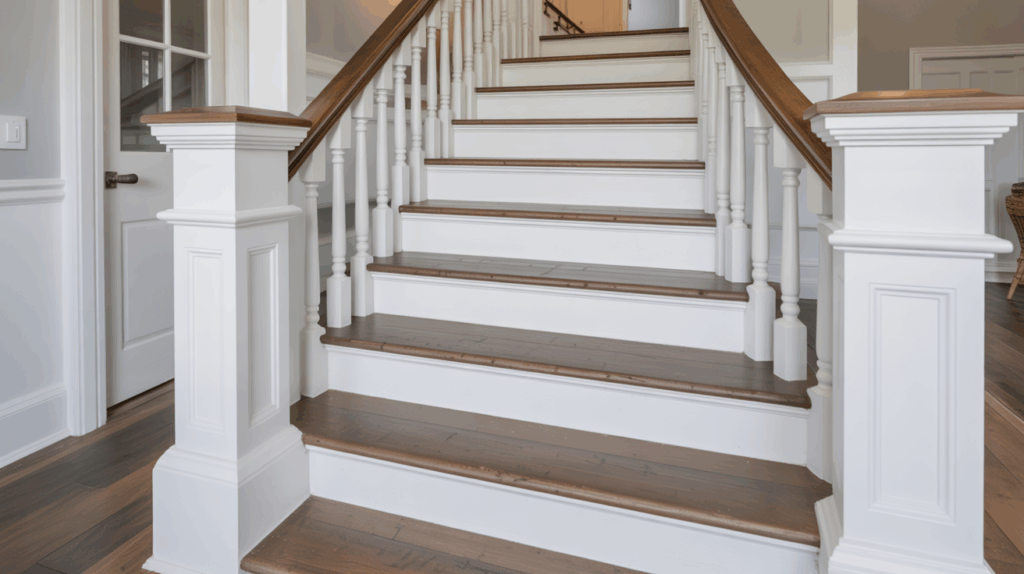
This high-contrast combination has graced beautiful homes for over a century, and its popularity shows no signs of fading. The crisp white risers and balusters create visual lightness while dark stained treads add warmth and durability.
Choose oak or maple treads stained in walnut or espresso tones, paired with white-painted risers and spindles. This combination works equally well in traditional colonials and modern farmhouses, offering a clean backdrop that adapts to changing decor styles.
For maintenance, the dark treads hide wear better than lighter options, while painted elements can be touched up easily. Benjamin Moore’s White Dove or Sherwin Williams’ Pure White are professional favorites that photograph beautifully and maintain their brightness over time.
This design typically costs $3,000-$6,000 for a standard staircase renovation, making it an accessible upgrade with significant visual impact.
2. Wainscoting Throughout the Hallway
Wainscoting adds architectural depth and protection to hallway walls while creating that coveted custom-home feel. This detail has adorned fine homes since the 18th century and continues to elevate modern interiors.
Install board-and-batten, shaker-style panels, or traditional raised paneling to the lower third of your hallway walls (typically 32-36 inches high). Paint it in the same color as upper walls for subtle sophistication, or contrast with darker tones below for added definition.
Home Depot and Lowe’s offer pre-made wainscoting kits starting at $1.50-$3.00 per square foot, while custom millwork ranges from $8-$15 per square foot installed. The investment protects walls from scuffs and dings in high-traffic areas.
Wainscoting works beautifully in narrow hallways because the horizontal lines make spaces feel wider than they actually are.
3. Natural Wood Staircase Runner
A stair runner combines the warmth of carpet with the beauty of exposed wood, creating a timeless look that’s both practical and elegant. This approach dates back to grand estate homes and translates perfectly to contemporary spaces.
Choose a durable natural fiber like wool, sisal, or a wool-synthetic blend in classic patterns like stripes, subtle geometrics, or solid neutrals. Install with decorative runner rods for a traditional touch, or modern clips for cleaner lines. Leave 3-4 inches of wood exposed on each side.
Dash & Albert offers excellent runners starting at $200-$400 for standard stairs, while custom options from Stark Carpet or The Rug Company range from $800-$2,000. Professional installation costs $200-$400 additional.
Runners reduce noise, prevent slips, and add cushioning while showcasing your beautiful wood stairs—plus they’re easier to replace than full carpeting.
4. Gallery Wall of Family Photos in Matching Frames
A curated photo gallery transforms a hallway into a personal museum, celebrating family history while adding visual interest to otherwise blank walls. This approach has remained popular across generations because it’s deeply personal yet universally appealing.
Select matching frames in black, white, natural wood, or antique gold, keeping sizes consistent (8×10, 11×14, or 16×20 work well). Arrange in a grid pattern for modern symmetry or salon-style for traditional charm, maintaining 2-3 inches between frames.
Shop affordable matching frames at IKEA (RIBBA line, $10-$25 each), Target’s Gallery Solutions ($15-$30), or invest in quality wood frames from Framebridge ($45-$85 each). Plan on 9-15 frames for a standard hallway gallery.
Hang frames at eye level (57-60 inches to center), and use a level and painter’s tape to map your layout before hammering nails.
5. Statement Console Table with Mirror Above
This entryway pairing has anchored welcoming foyers since Victorian times, providing both function and focal point. The combination creates depth, reflects light, and offers practical surface space.
Position a console table (30-36 inches high, 12-16 inches deep) against your hallway wall with a mirror hung 4-6 inches above. Choose a table with drawer storage for keys and mail, and style with a table lamp, small tray, and seasonal greenery.
West Elm, Pottery Barn, and Crate & Barrel offer quality console tables from $300-$800, while budget options at Target and HomeGoods range from $100-$250. Pair with mirrors from $80-$400 depending on size and frame quality.
This setup works best in hallways at least 4 feet wide to maintain comfortable traffic flow around the furniture.
6. Recessed Panel Walls
Recessed wall panels add sophisticated dimension without overwhelming small spaces. This architectural detail brings formal elegance to hallways and stairwells while remaining adaptable to various decor styles.
Create panels using picture frame molding or decorative trim arranged in rectangular patterns on your walls. Paint panels the same color as walls for subtle texture, or use contrasting shades for drama. Typical panel sizes are 24×36 or 30×48 inches.
Purchase pre-cut molding kits from Metrie or Alexandria Moulding (starting at $50-$100 per panel area), or hire a carpenter for custom installation at $15-$30 per linear foot. DIY-friendly trim from home improvement stores costs $1-$3 per linear foot.
This treatment works especially well on longer hallway walls where large artwork might feel out of place or proportionally awkward.
7. Classic Pendant Lighting at Regular Intervals
Evenly spaced pendant lights create rhythm and visual interest while providing functional illumination. This approach replaced wall sconces in many modern homes while maintaining timeless appeal.
Hang pendants every 6-8 feet down your hallway, positioning them 7 feet above the floor for clearance. Choose glass globes, simple drum shades, or lantern styles in finishes like brushed nickel, bronze, or matte black that coordinate with door hardware.
Affordable options from Schoolhouse Electric or Rejuvenation range from $100-$250 per pendant, while budget-friendly alternatives at Lowe’s or Wayfair start at $40-$80 each. Factor in electrician costs of $150-$300 per light if wiring doesn’t exist.
Dimmer switches ($15-$30 each) allow you to adjust lighting levels for ambiance, making hallways feel welcoming rather than institutional.
8. Striped Runner Carpet in Classic Colors
Horizontal or vertical stripes add movement and visual interest to stairs while remaining timelessly chic. This pattern choice has roots in British and Colonial design traditions.
Select a runner with stripes in neutral combinations: navy and cream, gray and white, black and tan, or subtle tone-on-tone variations. Choose stair-width runners (typically 27-32 inches) in durable, tightly woven wool or polypropylene blends rated for heavy traffic.
Dash & Albert’s classic striped runners cost $8-$15 per linear foot, while similar styles at Rugs USA or Overstock start at $5-$10 per foot. Standard staircases require 30-45 linear feet of runner material.
The linear pattern naturally guides eyes upward or forward, making hallways and staircases feel longer and more intentional in their design.
9. Built-In Bench with Storage Below
A hallway bench provides practical seating for removing shoes while maximizing storage in underutilized space. This functional element has appeared in mudrooms and entryways for generations.
Install a built-in bench 18 inches deep and 18-20 inches high with lift-up seat storage or pull-out drawers below. Add cushioning on top and hooks above for coats and bags. Paint in the same color as trim for seamless integration.
Pre-made storage benches from IKEA (HEMNES or MACKAPÄR lines) cost $150-$300, while custom built-ins from a carpenter run $800-$2,000 depending on dimensions and features. DIY builds using stock cabinets cost $300-$600 in materials.
Position benches near entrances or at stairway landings where they serve specific purposes rather than simply filling space.
10. Neutral Paint with White Trim
This foundational color scheme creates a clean, bright backdrop that never feels dated. The crisp contrast between walls and trim defines architectural features while maintaining versatility.
Choose warm neutrals like greige, taupe, or soft gray for walls (Sherwin Williams’ Accessible Beige, Benjamin Moore’s Revere Pewter, or Farrow & Ball’s Cornforth White), with bright white trim in semi-gloss finish. This combination makes spaces feel larger and reflects maximum light.
Quality paint costs $40-$70 per gallon, with most hallways requiring 1-2 gallons for walls and 1 gallon for trim. Professional painting costs $2-$6 per square foot, while DIY supplies cost under $100 for a typical hallway.
Semi-gloss trim paint (versus flat or eggshell) resists scuffs and cleans easily—critical for high-traffic trim that takes regular abuse from bags and furniture.
11. Traditional Wall Sconces at Regular Intervals
Wall-mounted lighting fixtures add elegance and function without consuming floor or ceiling real estate. Sconces have illuminated hallways since gaslight days and remain a sophisticated choice.
Install sconces every 8-10 feet along hallway walls at 60-66 inches from floor to center. Choose classic styles with fabric shades, glass globes, or candle-style designs in finishes that match door hardware and fixtures.
Affordable sconces from Lamps Plus or Bellacor range from $50-$150 each, while designer options from Visual Comfort or Circa Lighting cost $200-$500. Include electrician installation at $100-$200 per fixture if new wiring is needed.
Sconces create ambient lighting that’s more sophisticated than harsh overhead fixtures, making hallways feel like intentional living spaces rather than utilitarian pass-throughs.
12. Hardwood Flooring Throughout
Continuous hardwood flooring unifies your home’s flow while providing durability and timeless beauty. Wood floors have been the gold standard in quality homes for centuries.
Install 3-inch or 5-inch plank oak, maple, or hickory in natural, medium, or dark stains that complement your overall home aesthetic. Run planks lengthwise in hallways to emphasize length, and consider herringbone or diagonal patterns on landings for visual interest.
Solid hardwood costs $6-$12 per square foot installed, while engineered hardwood (better for basements and areas with moisture) runs $4-$8 per square foot. Budget options like oak start at $3-$5 per square foot uninstalled.
Hardwood’s refinishing potential means your floors can be refreshed multiple times over decades, making this a true investment in your home’s long-term value.
13. Decorative Stair Brackets
Ornamental brackets beneath stair treads add Victorian-era charm and architectural interest without major renovation. These functional details became decorative elements in fine homes.
Install carved or cutout wooden brackets in painted or stained finishes that complement your balustrade style. Space them one per tread or every other tread depending on visual weight. Styles range from simple curved profiles to elaborate scroll designs.
Ready-made brackets from Lowe’s or Home Depot cost $8-$25 each, while custom turned brackets from specialty millwork companies run $30-$80 each. Installation is straightforward for DIYers with basic carpentry skills.
This detail works best with open staircases where brackets are visible; they add little value when carpeting or closed risers hide them from view.
14. Plate Rail or Picture Molding
A horizontal molding installed 12-18 inches below the ceiling creates an elegant detail that’s both decorative and functional. This feature appeared in craftsman and colonial homes for displaying decorative plates or hanging artwork.
Install chair rail or crown molding as a picture rail, painting it the same color as trim. Use it to display small artwork, decorative plates, or leave it as pure architectural detail. This element adds visual height and breaks up tall walls.
Pre-made molding costs $1-$4 per linear foot at home improvement stores, while custom profiles run $5-$12 per linear foot. Professional installation adds $3-$8 per linear foot, or tackle this as a weekend DIY project.
Picture rails work especially well in homes with 9-foot or higher ceilings where they help bring down the visual scale to more intimate proportions.
15. Classic Newel Post Design
The newel post anchors your staircase both structurally and visually. Substantial, well-crafted newel posts signal quality construction and timeless design.
Choose square or turned wood posts 4-6 inches across in styles that match your home’s architecture—simple craftsman, ornate Victorian, or clean contemporary. Finish in painted white, stained wood, or even wrapped with shiplap for modern farmhouse appeal.
Stock newel posts from home centers cost $40-$150 each, while custom turned posts from specialty woodworkers run $200-$500. Installation requires carpentry skills but is manageable for experienced DIYers.
The newel post should feel substantial and secure—wobbly posts immediately signal cheap construction, while solid posts convey quality and permanence.
16. Symmetrical Decor Arrangement
Balanced, symmetrical styling creates calm, orderly hallways that feel professionally designed. This principle derives from classical architecture and remains a foundation of timeless design.
Arrange matching table lamps, paired artwork, or identical wall sconces on either side of mirrors, doorways, or console tables. Maintain equal spacing and identical heights for true symmetry. This approach works particularly well in formal entryways and traditional homes.
Shop for pairs rather than individual pieces—Target’s threshold line, West Elm, and Pottery Barn regularly offer matching decorative items. Budget $100-$400 for paired lamps or $50-$200 for matching artwork in frames.
Symmetry creates instant visual calm and makes decorating decisions simpler because you’re essentially styling one side and mirroring it.
17. Natural Fiber Stair Runner
Sisal, jute, or seagrass runners bring organic texture and coastal elegance to staircases. These natural materials have been used in fine homes for over a century and fit multiple design styles.
Install a natural fiber runner in herringbone, basketweave, or plain weave patterns, typically with a border in contrasting color. These materials are incredibly durable, hide dirt well, and add subtle texture without overwhelming patterns.
Natural fiber runners cost $8-$15 per linear foot from companies like Sisal Rugs Direct or The Natural Carpet Company. Budget alternatives at Rugs USA or Wayfair start at $5-$9 per linear foot.
Be aware that natural fibers can be scratchy underfoot for those preferring plush carpeting, and they require professional cleaning rather than DIY steam cleaning.
18. Transom Windows Above Doorways
Transom windows above hallway doors allow light to flow between spaces while maintaining privacy. This architectural feature was standard in pre-1920s homes and adds character to modern renovations.
Install rectangular glass transoms above bedroom and bathroom doors in hallways. Choose clear, frosted, or decorative glass depending on privacy needs. This addition brings borrowed light into otherwise dark corridors without sacrificing wall space.
New transom window installation costs $400-$1,200 per opening including framing, glass, and trim work. This requires structural modification but adds significant architectural character and improved light flow.
Transoms work best in homes with 9-foot or higher ceilings where there’s adequate space above standard 6’8″ or 7′ door heights.
19. Painted Ceiling in Unexpected Color
While walls stay neutral, a painted ceiling adds personality without overwhelming small spaces. This technique has regained popularity as designers embrace the “fifth wall.”
Paint hallway ceilings in soft blue (a Southern tradition), pale blush, sage green, or even dramatic charcoal for contrast. Keep walls and trim neutral so the ceiling becomes a subtle surprise element rather than dominant feature.
The same quality paint used for walls works for ceilings ($40-$70 per gallon). Most hallway ceilings require less than one gallon. Use flat or matte finish to minimize imperfections.
This technique works particularly well in homes with simple ceiling architecture—ornate coffered or beamed ceilings don’t need additional color interest.
20. Classic Baseboard Molding
Substantial baseboards (5-7 inches high) ground your walls and hide the gap where flooring meets drywall. Proper baseboard molding signals quality construction and finished craftsmanship.
Install colonial or craftsman-style baseboards in painted white or off-white to match other trim. Add a small cap molding at the top for extra detail. Taller baseboards suit homes with higher ceilings and create more formal, traditional appearances.
MDF baseboards cost $0.80-$2 per linear foot, while solid wood ranges from $2-$6 per linear foot. Professional installation adds $2-$4 per linear foot, though this is an accessible DIY project with a miter saw and brad nailer.
Paint-grade MDF baseboards offer smooth surfaces perfect for painted finishes at lower cost than solid wood, with better dimensional stability in humid environments.
21. Antique or Vintage Rug Runner
A carefully selected antique runner adds character, color, and pattern that machine-made versions cannot replicate. These pieces bring instant age and sophistication to new construction or renovated homes.
Source vintage Persian, Turkish, or wool runners at estate sales, antique shops, or online through Chairish, 1stDibs, or eBay. Look for pieces with wear consistent with age but structurally sound construction. Measure carefully—most runners are 2.5-3.5 feet wide and 8-12 feet long.
Authentic vintage runners range from $200-$800 for smaller pieces to $1,000-$3,000 for larger or finer examples. New “vintage-look” alternatives from Loloi or Magnolia Home cost $150-$600.
Layer runners over hardwood or place on low-traffic hallways where they won’t receive excessive wear—these pieces have already survived decades and deserve preservation.
22. Shiplap or Tongue-and-Groove Accent Wall
Horizontal wood planking adds texture and cottage charm to hallways and stairwells. While trendy in recent years, this technique has roots in 19th-century vernacular architecture.
Install 1×6 or 1×8 pine boards horizontally with slight gaps between (true shiplap) or tight joints (tongue-and-groove). Paint in white or soft neutrals for clean modern farmhouse style, or leave natural for rustic cabins. Apply to one accent wall rather than every surface.
Pre-primed pine boards cost $0.80-$1.50 per linear foot at home centers, with typical hallway accent walls requiring $150-$300 in materials. MDF “shiplap” panels offer faster installation at $1-$2 per square foot.
This treatment works best in casual, transitional, or farmhouse-style homes—it can feel out of place in formal traditional or contemporary modern spaces.
23. Arched Doorways and Openings
Soft arches add architectural romance and old-world elegance that rectangular openings cannot match. This detail appears in Mediterranean, Spanish Colonial, and Romantic-era architecture.
Create rounded arch tops over hallway entrances, doorways, or pass-throughs. Work with a carpenter or plasterer to achieve smooth curves. Paint arches the same color as surrounding walls for subtle sophistication, or highlight in white trim.
Adding arches to existing rectangular openings costs $500-$1,500 per opening depending on materials and curve radius. This requires skilled carpentry or drywall work but transforms ordinary spaces dramatically.
Arches work best in homes with complementary architectural details like curved windows, rounded furniture, or Mediterranean-inspired design elements throughout.
24. Decorative Tile or Stone Flooring
Natural stone or decorative tile creates impressive entryways that withstand heavy traffic while making elegant first impressions. This material choice signals quality and permanence.
Install marble, travertine, slate, or porcelain tile in classic patterns like herringbone, basketweave, or simple running bond. Choose neutral colors and traditional formats (12×24, 18×18, or smaller mosaics) that won’t feel dated as trends shift.
Natural stone costs $8-$20 per square foot installed, while quality porcelain tile ranges from $5-$12 per square foot. Small entryway areas typically require $500-$1,500 in materials and installation.
Stone and tile work best in entry hallways and ground-floor spaces—upper floors benefit more from the warmth and sound-dampening qualities of wood or carpet.
25. Traditional Door Hardware in Classic Finishes
Door handles, hinges, and hardware are the jewelry of your hallways. Consistent, quality hardware throughout creates cohesive design that lasts decades.
Replace mismatched or builder-grade hardware with matching sets in oil-rubbed bronze, brushed nickel, polished brass, or matte black. Choose lever handles for accessibility and timeless profile over trendy designs. Include matching hinges for a finished appearance.
Quality door hardware from Schlage, Kwikset, or Baldwin costs $30-$80 per door for interior passage sets, while premium options from Emtek or Rocky Mountain Hardware run $100-$300 per door.
Match your hallway hardware finish to bathroom and kitchen fixtures throughout your home—mixed metal finishes can work but require careful curation to avoid looking haphazard.
Creating Your Timeless Hallway
These 25 ideas represent design principles that have endured through changing trends because they balance beauty with function, tradition with livability. The key to timeless design isn’t following rigid rules but choosing quality materials, classic proportions, and neutral foundations that allow your personal style to evolve.
Start with one or two impactful changes—perhaps updating paint and trim, or installing new lighting—and build from there as budget allows. Remember that hallways and staircases are high-traffic areas where quality investments pay off through years of daily use and enjoyment.
What timeless element will you add to your hallway first? Share your renovation plans or favorite classic design details in the comments below—we’d love to hear which of these ideas resonates with your home’s unique style and needs.